Inside this story Context & sources
This article links to 4 sources. Source links are provided below so you can inspect the evidence yourself.
- Tail Air 2 has a 1-inch-type sensor; Tail 2 ADV pairs a smaller sensor with 21× optical zoom.
- The ADV’s SDI output and HDR recording mode have lower limits than the headline 4K/60 capability.
- OBSBOT plans 8 December availability; South African stock and support have not been verified.
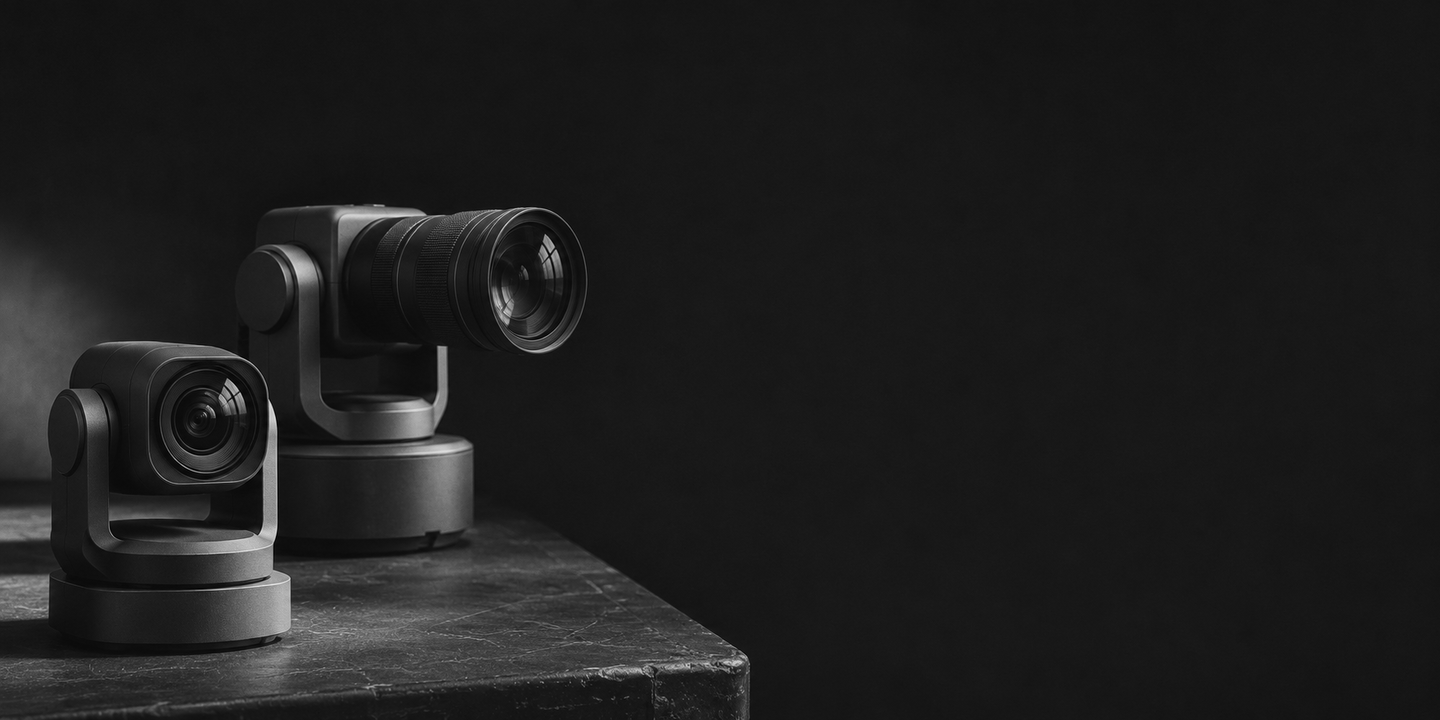
OBSBOT has given its latest motorised cameras different priorities. The Tail Air 2 moves to a 1-inch-type sensor, while the Tail 2 ADV combines a smaller sensor with a 21× optical zoom. Both were formally announced on 19 November. The choice is less about which has the bigger headline number than where a camera can sit and what it needs to frame. [1] [2] [4]
More room on the sensor
Tail Air 2 pairs its sensor with an f/1.9 lens and records at up to 4K and 60 frames per second, according to OBSBOT. It also adds a roll axis: the lens module can rotate for vertical recording. The company says that produces vertical 4K without cropping the sensor’s imaging area. RedShark’s launch report describes the same change. [1] [3]
A lens for the back of the room
The ADV takes the other route, using a 1/2-inch-type sensor and a 21× optical zoom. OBSBOT positions it for larger venues and live events. Optical zoom changes the lens’s framing rather than merely enlarging a selected part of an image. That reach could matter when the available camera position is far from a speaker or stage. [2] [3]
Start with the shot
Our view is that the venue should decide the comparison. A camera placed close to a presenter has a different job from one mounted behind an audience. Before weighing tracking features, a production team could map the available mounting positions and the widest and tightest shots each needs to deliver. That gives the sensor-and-lens choice a concrete purpose.
The output path has limits
The ADV’s 3G-SDI connection outputs up to 1080p at 60 frames per second; its HDMI output supports 4K, according to the manufacturer. A 4K-capable camera therefore does not make every connection a 4K connection. Tail Air 2 supports NDI HX3 through an NDI-enabled version or a separately purchased licence. Teams using that network-video format need to distinguish those options. [2] [1] [3]
Check the selected recording mode
There is another limit worth keeping alongside the headline specifications. OBSBOT and RedShark say the ADV supports HDR at up to 4K/30p, with the specified autofocus mode enabled, but not at 4K/60p. The Open Tab has not tested either camera’s footage or subject tracking. These are announced capabilities and conditions, not measured results from our own shoot. [2] [3]
November announcement, December plan
Both manufacturer releases date pre-orders to 4 November and schedule general availability for 8 December. The 19 November announcements followed that earlier pre-order opening; this is not a fresh launch today. RedShark also reports the December date. OBSBOT names its online store, Amazon US and selected retailers, while qualifying availability by region. [1] [2] [3]
For South African crews, local stock, support and pricing remain unverified here. Our practical takeaway is to settle the required shot, signal connection and recording mode before treating automated movement as the deciding feature. A camera that follows a subject still needs to fit the rest of the production.
Sources & further reading
1. OBSBOT announces Tail Air 2Original 19 November vendor announcement: sensor, roll, output options and planned availability. Company capability claims, not our test results.
2. OBSBOT announces Tail 2 ADVOriginal 19 November vendor announcement: optical zoom, sensor, SDI resolution and HDR limits. Same company as the Air 2 source.
3. RedShark compares the two camerasAndy Stout’s separate 19 November trade report. Corroborates the announced specification split and December plan; no independent tracking or image-quality benchmark.
4. TV Tech reports the two-camera launchPhil Kurz’s 19 November report. Separate publisher covering manufacturer specifications, including sensor sizes and optional NDI; not a hands-on review.
The two OBSBOT announcements are one company’s statements. RedShark and TV Tech are separate trade publishers reporting those specifications, not independent performance tests. We have not used either camera or verified South African availability.