Inside this story Context & sources
This article links to 2 sources. Source links are provided below so you can inspect the evidence yourself.
- Both new Surface devices use NVIDIA’s RTX Spark platform
- Unified memory and theoretical FP4 figures need their footnotes
- Local stock, price and real workload performance still need verification
A laptop and a desktop with a shared platform
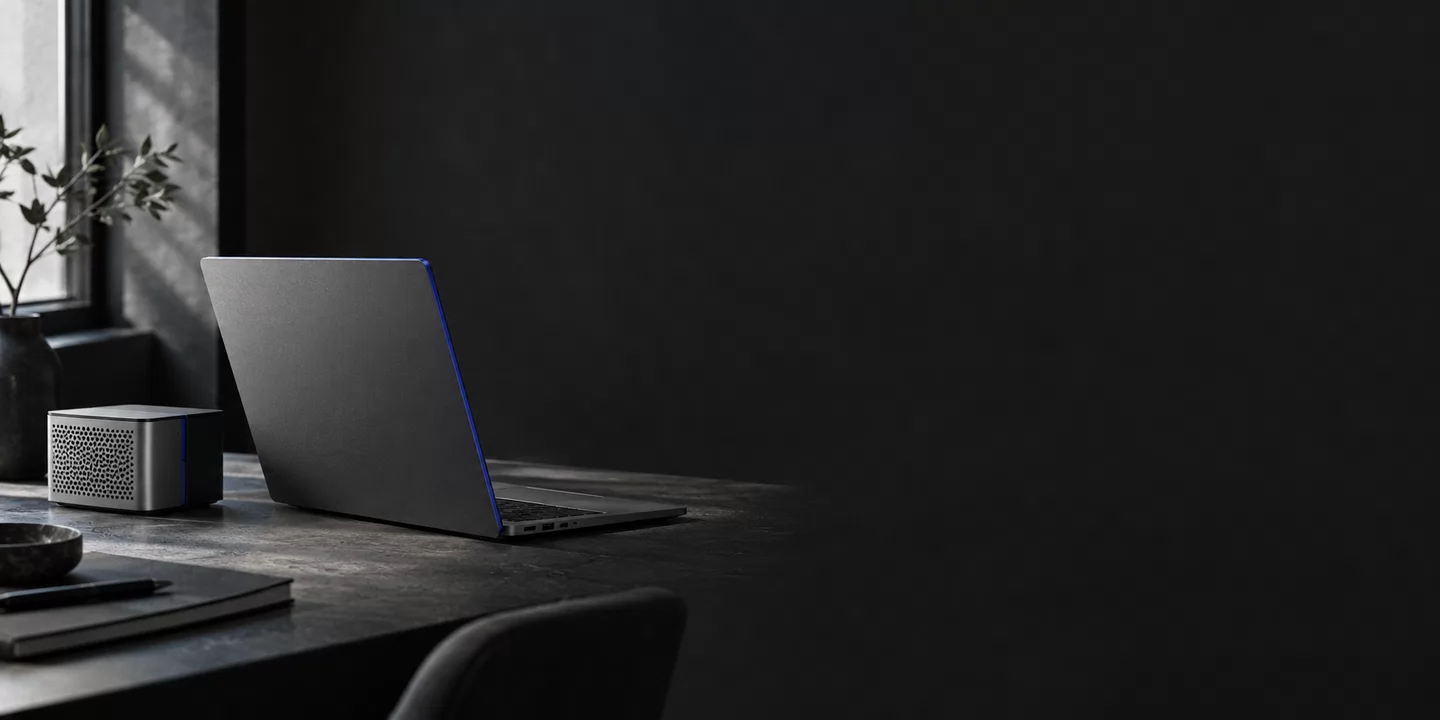
Microsoft opened pre-orders for Surface Laptop Ultra and Surface RTX Spark Dev Box on 7 October. Both use NVIDIA’s RTX Spark platform, with configurations offering up to 128 GB of unified memory for creative, development and local AI work. [1]
Microsoft says memory is shared between CPU and GPU; GPU-addressable capacity is lower and workload-dependent. Its one-petaflop claim is theoretical sparse FP4 performance, rather than measured response speed for a particular task. [1]
NVIDIA’s platform page also distinguishes the available chip configurations and describes native CUDA support. It is useful platform context, but a partner’s specification sheet is not an independent test of how a finished laptop performs in someone’s software. [2]
Read the configuration before the promise
Our reading is that the interesting proposition is keeping some work close to the person doing it. The announcement invites developers and creators to consider local AI alongside their existing tools. It leaves room for a more concrete question: what exact job would this particular configuration let someone complete well?
A demonstration should make that job visible. Ask to see the chosen software, its settings, the model or project being used, and the result. An impressive headline capacity is easier to assess when the person presenting it also explains the limits of the setup and shows the work from beginning to end.
The announcement lists a 15-inch touchscreen, HDMI, USB-A and an SD reader among the physical features. Its notes explicitly exclude Surface Pen and similar pen accessories. [1]
The local buying question remains open
For a South African reader, we would start with the exact locally offered model, support arrangements and the applications used each day. This report does not establish South African stock, pricing or shipping dates. The international announcement is a useful starting document, rather than a local quotation or purchase recommendation.
There is also a choice between a machine that travels and one that stays at a desk. Our view is that it is worth describing where the work happens before judging either form factor. A compelling desktop demonstration may not answer a travelling creator’s needs, and portability alone may not justify a more demanding configuration.
Surface’s announcement brings local AI into the hardware conversation. The most useful next evidence would be an identifiable configuration completing an identifiable task, with its limitations stated as clearly as its headline numbers. We have not run that hands-on test.
Sources & further reading
1. Pre-order our most powerful Surface devices ever — MicrosoftSpecifications and availability are manufacturer claims. Footnotes qualify memory, theoretical FP4 performance and market-dependent configurations.
2. NVIDIA RTX Spark: laptops and small desktopsHardware-platform specifications from a launch partner, not an independent benchmark of a Surface device.
AI-assisted research, writing and a separate source-checking pass by the same Codex assistant. Company accounts remain attributed; editorial suggestions are identified as our interpretation. No independent hands-on test is claimed.