Inside this story Context & sources
This article links to 3 sources. Source links are provided below so you can inspect the evidence yourself.
- Energy claims depend on reliable data
- Customers still pay their utility bills
- Renewable procurement does not ensure uninterrupted supply
From agreement to monthly settlement
Vodacom has marked a full year of commercial virtual wheeling with Eskom, covering September 2025 to August 2026. In its 1 October announcement, the operator says monthly refunds have been processed since November 2025 after reconciliation of its energy claims. [1]
The arrangement was signed in 2023. Vodacom says two years of technical and regulatory work preceded commercial operation in September 2025. Mezzanine, its majority-owned subsidiary, developed the platform that aggregates electricity consumption across sites and matches it against generation from independent power producers. [1]
The challenge is scale: Vodacom describes more than 15,000 low-voltage sites spread across 168 licensed municipalities and direct Eskom supply. Its renewable-electricity goal is an ambition; the announcement does not establish that all of its electricity already comes from renewable sources. [1]
What virtual wheeling actually does
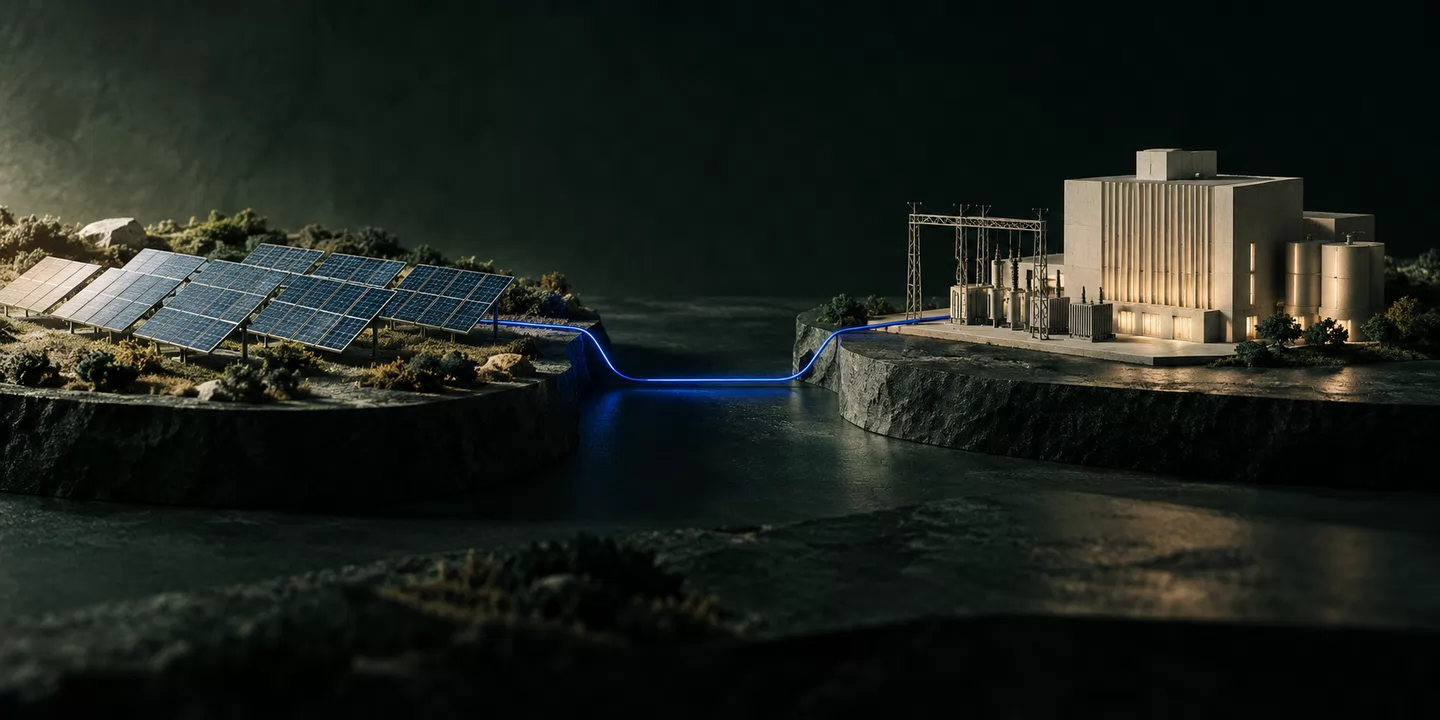
Eskom describes virtual wheeling as a financial mechanism using the existing electricity network. Multiple supply points can participate in retrospective claims for power purchased from generators. Customers continue paying their normal Eskom or municipal utility accounts; the wheeled-energy refund is processed separately. [2]
In Eskom’s explanation, the monthly calculation matches consumption and generation within time-of-use periods. It uses the lower of the two amounts for the applicable period, then applies the relevant tariff. Meter data, claims and validation therefore sit at the centre of the process. [2]
Eskom’s wider wheeling guide makes another distinction: matching electricity transactions does not mean the same electrons travel from a particular generator to a particular customer. It also says wheeling participants remain subject to load-shedding. A renewable procurement arrangement should not be read as a promise of uninterrupted supply. [3]
The business question
Our reading is that the milestone is as much about dependable administration as it is about generation. A nationwide business needs a process that can collect consistent records, reconcile them and produce settlements across a complicated set of supply points.
For another business, useful evaluation would begin with its own electricity profile and contracts. A successful example is a starting point for questions about operating requirements, rather than enough information to estimate a different company's savings or readiness.
Wider participation and disclosed operating results would make the next chapter more informative. The practical question is whether this kind of process can become routine for more businesses, with dependable records and settlements rather than a recurring administrative burden.
Sources & further reading
1. Vodacom and Eskom mark first anniversary of South Africa’s virtual wheeling mechanismThe operator’s account of the milestone and its network footprint; these results have not been independently audited.
2. Eskom Virtual WheelingUndated live product documentation; confirms mechanism not Vodacom’s settlement history.
3. What you need to know about wheeling of electricityUndated live explanatory guide; load-shedding and electricity matching caveats.
AI-assisted research and writing, with a separate source review. Vodacom supplies the anniversary report; Eskom explains the mechanism. We have not audited the operator’s refunds or calculated another business’s savings.